No massive following required. No blog necessary. Just the right strategy, the right tools, and a platform that keeps working for you long after you hit publish.
If you have ever dismissed Pinterest as a place to save recipes and home renovation ideas, you are leaving real money on the table.
Pinterest is one of the most underrated income-generating platforms available to beginners right now. Not because it is a secret.
But because most people who try it follow outdated advice, get minimal results, and assume the platform does not work for them personally.
It does work. It works consistently and compoundingly for people who understand how it actually operates. And the strategy is simpler than most beginners expect once someone lays it out clearly.
Here is something worth knowing before we get into the full strategy though…
Pinterest is a powerful long-term income platform. But it is not the fastest starting point for a complete beginner…
It typically takes three to six months of consistent effort before meaningful traffic and income begins to build. It works best when paired with a blog, which requires its own setup time and learning curve.
And the compounding that makes it so valuable takes patience that most beginners run out of before they ever see results.
If you want to start generating real income online faster, with no blog required, no months of waiting, and no complicated setup, Instagram is genuinely the better starting point in 2025.
My mentor Richard Yu teaches exactly how to do that in a free masterclass built specifically for beginners who want results without the long runway.
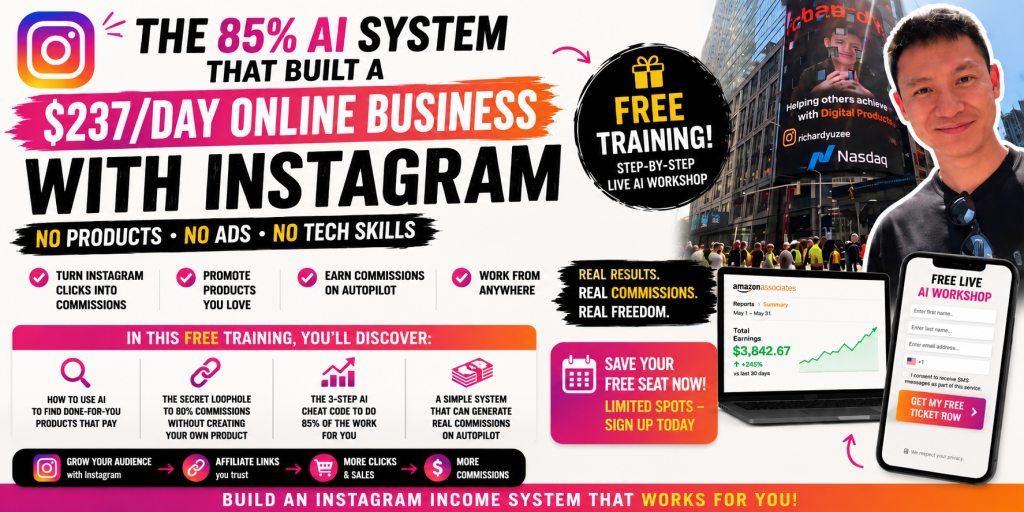
You can learn Pinterest alongside it or after it. But if speed and low barrier to entry matter to you, start there first, then keep reading for the complete Pinterest breakdown below.
Why Pinterest Is Different From Every Other Platform
Understanding why Pinterest works is just as important as knowing how to use it. Because once you understand the mechanics, the strategy becomes obvious.
Every major content platform has a content decay rate. The speed at which your posts stop being seen after you publish them.
On Instagram, a post is essentially invisible within 48 hours. On TikTok, you are only as relevant as your last video.
On Facebook, organic reach is so compressed that most posts reach a fraction of your own followers.
Pinterest operates on an entirely different model.
Pinterest is a visual search engine. People do not open Pinterest to scroll through what their friends are doing.
They open Pinterest because they are searching for something specific.
- A solution to a problem.
- A product recommendation.
- A how-to guide.
- A gift idea.
- And they arrive with genuine intent to act on what they find.
This is why a well-optimized pin can continue driving traffic and income for months, sometimes years, after it is published. The content does not decay the way it does on social platforms.
It compounds. And that compounding is the foundation of every successful Pinterest income strategy.
The trade-off is time. Pinterest rewards patience and consistency over months, not weeks. For beginners willing to play the long game, it is one of the most powerful free traffic platforms available. For beginners who need income sooner, pair it with a faster model first.
Step 1: Set Up Your Pinterest Business Account Correctly

The first step to making money on Pinterest for beginners is setting up the right type of account with the right foundational elements in place.
Switch to a free business account at business.pinterest.com.
This gives you access to Pinterest Analytics, which tells you exactly which content is driving real clicks and outbound traffic. Without this data you are guessing at what works.
Write a bio that speaks to search intent rather than personality.
Instead of describing yourself, describe exactly who you help and what problem you solve. “Helping budget-conscious families find the best home organization tools” tells Pinterest’s algorithm who to show your profile to. “Mom of three who loves coffee and DIY” tells the algorithm nothing useful.
Create boards with specific, searchable names. “Home Decor” competes with millions of boards. “Small Apartment Decorating Ideas on a Budget” is a searchable phrase that attracts a motivated, specific audience. Every board name should be a phrase someone would actually type into a search bar.
Claim your website through your business account settings. This signals to Pinterest that your content is verified and trustworthy, which improves the distribution of every single pin you publish going forward.
Step 2: Choose Your Income Model Before You Start Pinning

This is the step most beginners skip, and it is the one that determines whether everything else actually earns money.
There are three income models that work consistently for Pinterest beginners. Pick one and build around it before you create a single pin.
Affiliate Marketing is the most beginner-accessible model. You recommend products and services through affiliate links and earn a commission every time someone clicks your link and makes a purchase.
- No product creation.
- No customer service.
- No inventory.
Amazon Associates, ShareASale, and Impact all have free affiliate programs covering virtually every niche.
The key is linking pins to helpful, content-rich blog posts rather than directly to product pages.
A pin that leads to your detailed “best home office chairs under $300” article converts significantly better than one that drops visitors cold onto a product listing with no context or trust built.
Selling Digital Products is the highest-margin Pinterest income model. Planners, templates, guides, spreadsheets, and printables sell consistently through Pinterest because the platform’s visual nature lets you showcase the product before anyone clicks. Create once, sell indefinitely. AI builds the product with you, writes the sales copy, and generates the promotional content in a fraction of the time it used to take.
Driving Blog Traffic for Ad Revenue is a longer-term play but one of the most passive income models available once established. A blog with consistent Pinterest traffic qualifies for premium ad networks that pay based on page views. The more your Pinterest content compounds, the more the ad income compounds alongside it.
Step 3: Create Pins That Actually Get Clicked
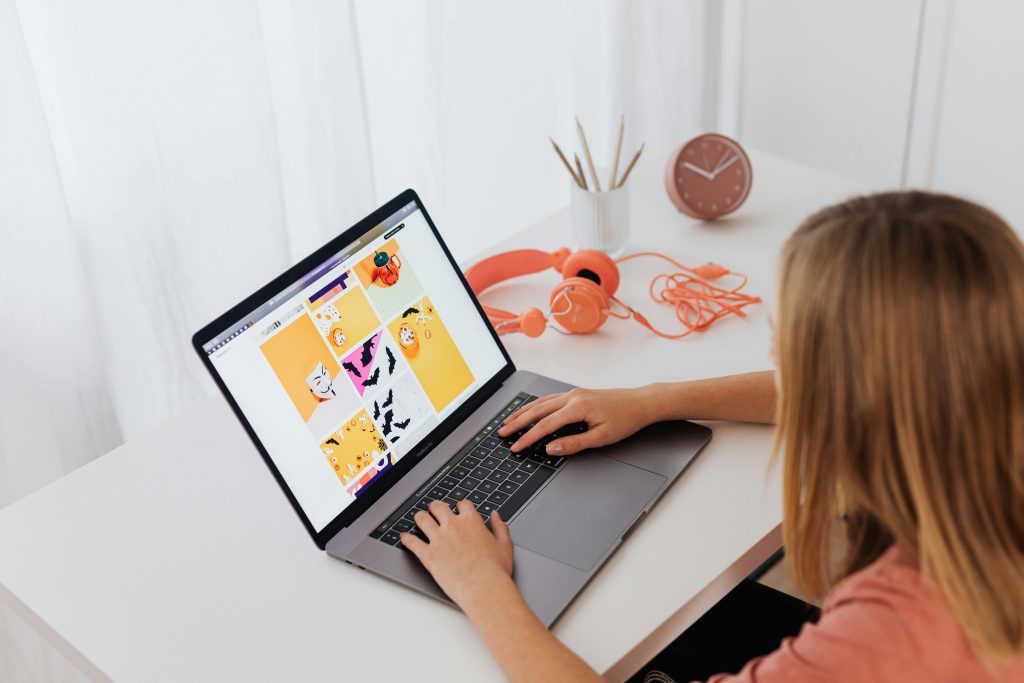
The difference between a pin that drives traffic for two years and one that gets ignored comes down to three elements.
The visual needs to stop the scroll. Vertical images at a 2:3 ratio perform best on Pinterest.
Bold, readable text overlaid on a clean, high-contrast image communicates the pin’s promise even on a small mobile screen.
Consistent fonts, colors, and layouts across your pins build recognition over time so your audience starts recognizing your content before they even read the text.
The title needs to lead with the search term. “7 Budget Meal Prep Ideas for Busy Families” will always outperform “My Favorite Meal Prep Tips” because the first version matches how real people search and the second one does not.
Specific, benefit-driven, keyword-forward titles drive both clicks and search distribution.
The description needs to do real work. Write 150 to 300 words that include your main keyword and related phrases naturally.
Think of it as a short introduction to the article or product you are linking to. End with a soft call to action that gives the reader a clear reason to click through.
Step 4: Pin Consistently and Let the Compounding Begin

Pinterest rewards consistency above almost everything else. A burst of 100 pins followed by three weeks of silence hurts your distribution more than it helps.
Moderate, daily activity signals to the algorithm that your account is active and worth promoting.
Aim for 10 to 15 pins per day across your boards. A scheduling tool lets you batch a full week of pins in under an hour and distribute them automatically at optimal times based on when your audience is most active.
That single workflow change converts Pinterest from a daily manual task into a monthly batching session.
The first 60 to 90 days will feel slow. That is normal and expected. Pinterest income is not immediate.
It is a compounding system that builds steadily and then accelerates significantly once the algorithm has enough data to understand who your content should reach.
Want to Start Earning Faster While You Build Your Pinterest Presence?
Pinterest is a powerful long-term asset. But if you are a beginner who wants to start generating real income while your Pinterest strategy is still building momentum, Instagram is the smarter parallel path.
Unlike Pinterest, Instagram does not require a blog.
- It does not take months before the first commission arrives.
- It works from your phone, in spare pockets of time, with low to zero startup cost.
And with AI handling the content creation, the learning curve that used to take months now takes weeks.
Richard Yu has built a complete beginner system that combines AI tools with Instagram to generate affiliate commissions for people starting from absolute zero.
He teaches the entire framework in a free masterclass that is genuinely built for people with no prior experience, no existing audience, and limited available time.
Build your Pinterest presence for the long game.
Use Richard’s system for income right now while you wait for the Pinterest compounding to kick in.
Both platforms work. One just starts paying faster. Come see exactly how.
👉 Access Richard’s free masterclass HERE
Register now and walk away with a complete action plan you can start implementing this week, while your Pinterest pins are quietly compounding in the background.
This post contains affiliate links. I may earn a commission if you register through my link, at no extra cost to you.